tallow vs coconut oil
Tallow vs Coconut Oil for Skin: Which Is Better?
Tallow vs coconut oil for skin, compared fairly. Learn about absorption, pore-clogging potential, and who each ingredient may suit best.

Key takeaways
- ✓Coconut oil has been a kitchen-to-bathroom favorite for years, and tallow is having a well-deserved moment.
- ✓Tallow is an animal fat whose composition closely resembles the lipids in human skin, so many people find it absorbs well and feels light when properly rendered.
- ✓Coconut oil is a plant-derived oil rich in medium-chain fatty acids.
- ✓Here is where the two diverge most.
Coconut oil has been a kitchen-to-bathroom favorite for years, and tallow is having a well-deserved moment. At TB Luxe, our family hand-renders grass-fed, pasture-raised tallow in small batches, but we want to give you a fair, honest comparison so you can pick what works for your skin.
Tallow vs coconut oil: the short answer
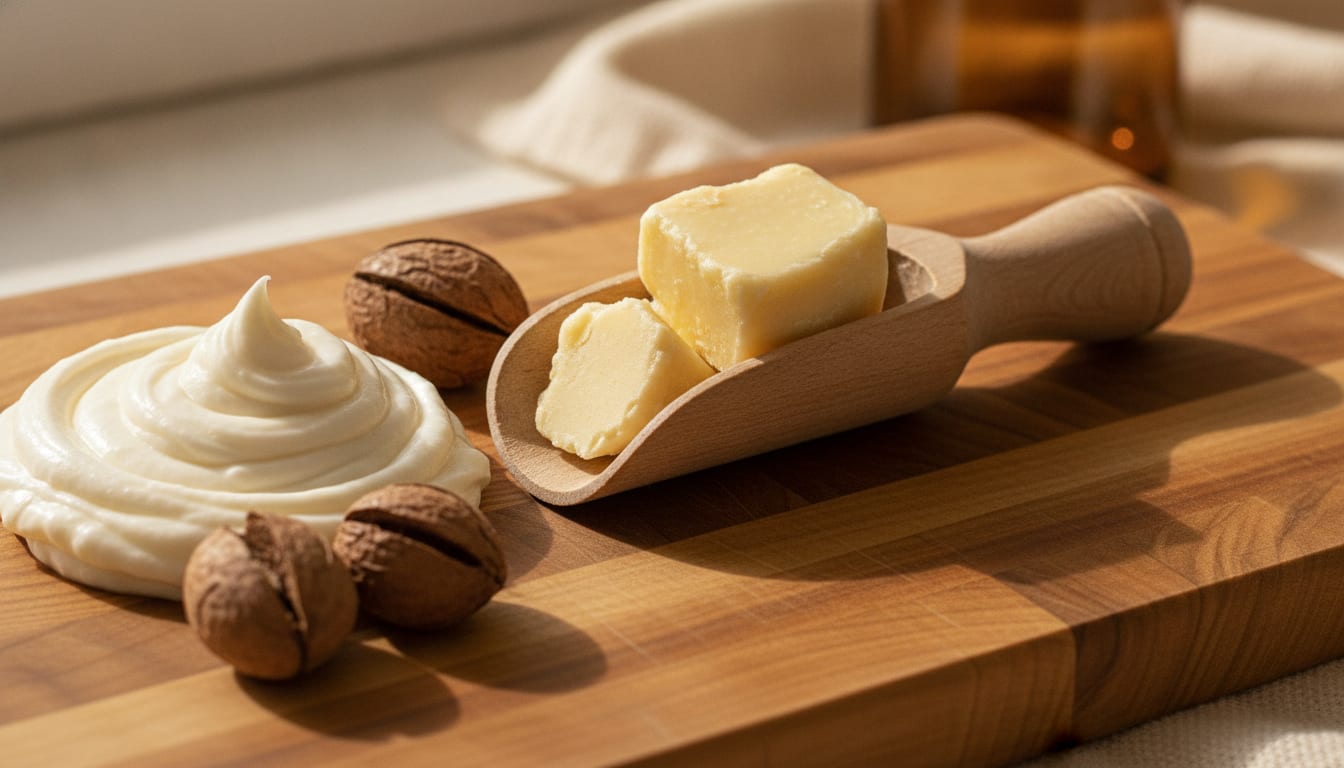
Tallow is an animal fat whose composition closely resembles the lipids in human skin, so many people find it absorbs well and feels light when properly rendered. Coconut oil is a plant oil that melts at skin temperature and feels silky, but it has a reputation for being more likely to clog pores for some people. Both moisturize; the right choice depends on your skin.
“Tallow is an animal fat whose composition closely resembles the lipids in human skin, so many people find it absorbs well and feels light when properly rendered.
What makes tallow different
Tallow's fatty acid profile is notably similar to the natural oils your skin already produces, which may help it absorb smoothly without a greasy after-feel (PMC11193910). Grass-fed, pasture-raised tallow is also a natural source of fat-soluble vitamins A, D, E, and K.
Properly rendered tallow does not smell like meat and is not greasy. At TB Luxe we purify ours with Mediterranean Sea salt in small batches, never using iodine salt, baking soda, or any artificial additives. Try our Royal Whipped Tallow Cream for a light, whipped everyday feel, packaged in reusable glass jars.
What makes coconut oil appealing
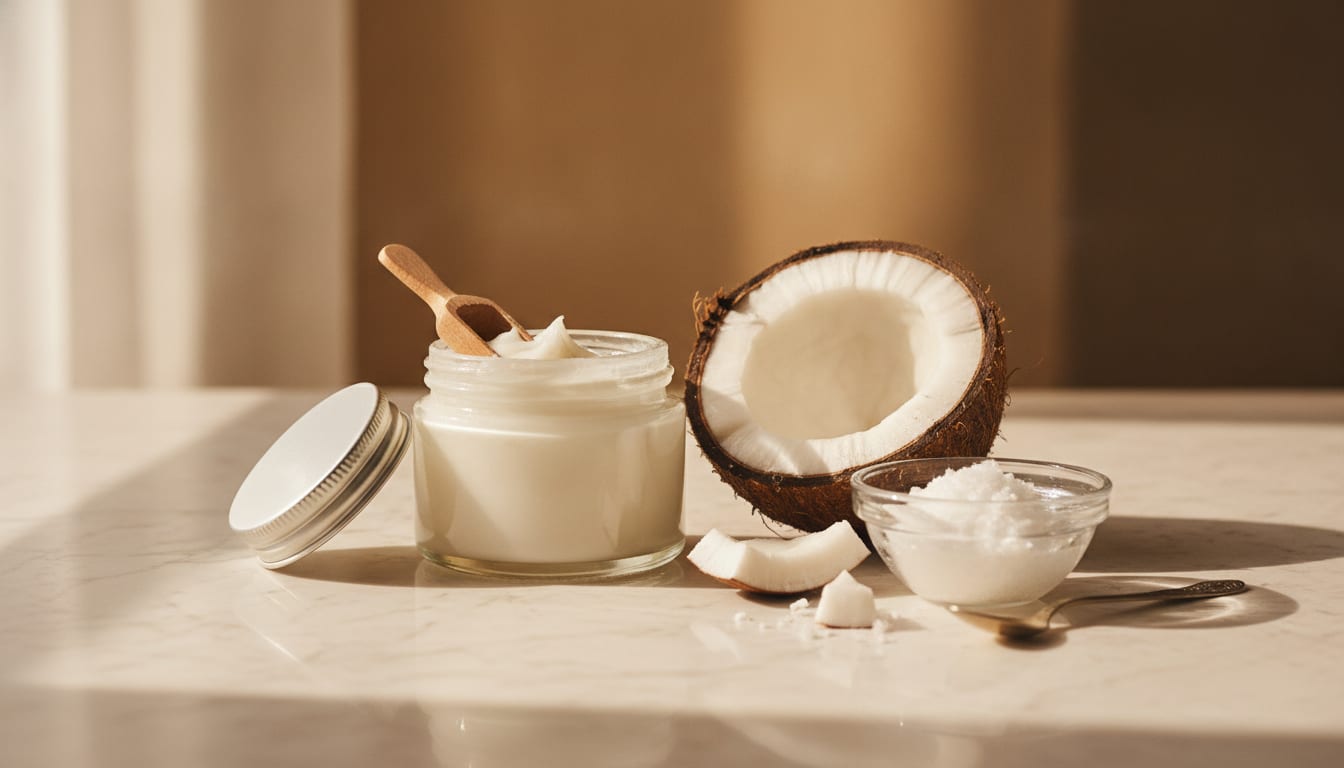
Coconut oil is a plant-derived oil rich in medium-chain fatty acids. Research describes it as an effective emollient that can support skin softness and the look of a hydrated barrier (PMC11719646). It melts on contact with warm skin and has a familiar, pleasant feel that many people enjoy.
The main consideration is comedogenicity. Coconut oil is widely regarded as more pore-clogging for certain skin types, particularly acne-prone or very oily skin. Tolerance varies from person to person, so a patch test is wise.
Absorption, feel, and pore-clogging potential
Here is where the two diverge most. Tallow's skin-like lipids tend to let it sink in without sitting heavily on the surface. Coconut oil can feel slick and may linger on top of the skin longer, and for some people it is more likely to contribute to clogged pores on the face.
A quick comparison summary:
- Source: Tallow is animal-derived; coconut oil is plant-derived.
- Skin similarity: Tallow closely mirrors human skin lipids; coconut oil is rich in medium-chain fatty acids.
- Feel: Tallow tends to absorb fast and feel non-greasy when well rendered; coconut oil feels silky but can sit on top.
- Pore considerations: Coconut oil has a higher reputation for clogging pores in some people; tallow is often better tolerated on the face.
- Best for: Tallow suits facial and everyday use for many; coconut oil suits body use and those who tolerate it well.
Who each one suits
If you are looking for a facial moisturizer that closely matches your skin's own oils and absorbs without greasiness, tallow is a strong choice, especially for combination or acne-prone skin that reacts to heavier oils. If you love coconut oil's feel and your skin tolerates it well, it remains a lovely body option.
For a more concentrated tallow option, see our Golden Tallow Balm, or explore the lightweight Royal Serum. You can compare everything on our shop all page.
Frequently Asked Questions
Is coconut oil bad for your face?+
Not necessarily, but it has a higher reputation for clogging pores in some people, especially acne-prone skin. Tolerance varies, so patch test before regular facial use.
Does tallow clog pores?+
Many people find tallow well tolerated on the face because its lipids resemble the skin's own oils. As with any product, individual results vary, so patch test first.
Which absorbs faster, tallow or coconut oil?+
Properly rendered tallow often absorbs quickly without greasiness, while coconut oil can feel slick and sit on the surface longer.
Does tallow smell like beef?+
No. When carefully rendered, tallow is essentially odorless. Our scented products use steam-distilled essential oils only.
Can I use both on different parts of my body?+
Yes. Some people use a light tallow cream on the face and coconut oil on the body. Choose what feels best for each area.
Why does TB Luxe use glass jars?+
We package our whipped creams, balms, scrubs, and serums in premium reusable glass jars, never plastic, to keep the product pure and the packaging reusable. These statements have not been evaluated by the Food and Drug Administration. This product is not intended to diagnose, treat, cure, or prevent any disease.
Tallow care to explore
Products our customers reach for


Have a question about your skin?
Marvin, our resident tallow expert, is here to help, and he’ll unlock 10% off your first order.
Chat with Marvin 🐮From the TB Luxe family
We’re Tabitha & Benjamin Moore, a family of seven hand-crafting grass-fed tallow skincare. Follow along for more honest tallow guides, new products, and where to find us in person.
Keep reading